Custom Canopies
Your outdoor event setup has about three seconds to make an impression.
In those three seconds, a potential customer may notice your logo, your colors, your products, or absolutely nothing at all. If your shelter looks like every other plain tent in the venue, your business can disappear into the crowd faster than free samples at a trade show.
That is where custom canopies earn their keep.
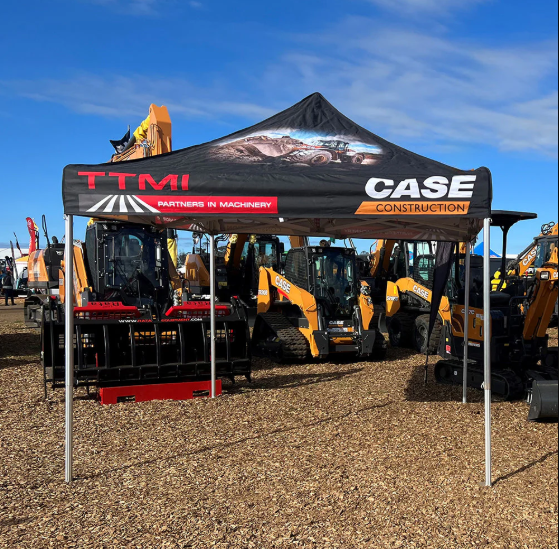
A well-designed branded canopy provides practical shelter while creating a recognizable space for your business. Whether you’re attending a farmers market, sponsoring a sporting event, exhibiting at a trade show, hosting a community event, or running an outdoor promotion, the right canopy can function as a mobile storefront, meeting space, product display, and marketing tool all at once.
However, choosing the right one requires more than picking your favorite color and uploading a logo. Frame construction, fabric quality, size, graphics, weather resistance, accessories, and long-term durability all matter.
Premium commercial canopies can cost more than basic recreational shelters, but quality is worth prioritizing. When your canopy represents your business, it should look professional and perform reliably event after event.
Let’s take a closer look at how to choose one that does both.
First Impressions Start With the Brand
Before choosing materials or dimensions, start with your brand.
Your canopy should look like an extension of your business rather than a temporary structure that happens to have your logo printed on it.
Think about your established brand colors, typography, logo placement, photography, and messaging. A consistent visual identity helps customers recognize your company quickly, particularly at crowded events.
For example, a sports company might use energetic colors and large action-oriented graphics. A luxury business may prefer understated colors and elegant branding. A children’s activity company might choose brighter visuals and playful imagery.
There isn’t one correct design.
The correct design is the one that looks unmistakably like your business.
Choose the Right Size for the Job
Size is one of the first practical decisions you’ll need to make.
A smaller canopy can work beautifully for a compact vendor booth, registration station, sampling area, or promotional setup. Larger structures provide additional room for products, furniture, demonstrations, staff, and customers.
Don’t choose based solely on how impressive a larger canopy looks.
Instead, consider what will actually happen underneath it.
Will you have one table or several? Will customers need room to walk around? Will staff conduct demonstrations? Are you displaying merchandise? Do you need storage space?
A canopy that looks spacious when empty can feel surprisingly crowded once you add tables, chairs, product displays, signage, people, and the inevitable collection of equipment that somehow follows every event team around.
Planning the interior before purchasing can prevent that problem.
Make the Roof Work for You
The roof is one of your most valuable branding surfaces.
At busy outdoor events, customers may see the top of your canopy before they can see the front wall. A large logo, distinctive color scheme, or recognizable pattern can therefore make your booth easier to spot from a distance.
Keep the design bold and simple.
Tiny text may look impressive on a computer screen but becomes rather useless when viewed from across a festival field.
A strong logo and recognizable brand colors usually have greater impact than trying to fit your entire marketing brochure onto the roof.
Your canopy isn’t a newspaper.
Let it breathe.
Turn Sidewalls Into Marketing Space
Sidewalls provide more than privacy and weather protection.
They can become some of the most useful surfaces for branding.
A sidewall can feature a large logo, product image, slogan, promotional message, or other graphic. Businesses can also use walls to create more defined spaces within the canopy.
For example, a company might use one wall for branding, another for product information, and a third as a partially enclosed consultation area.
A custom tent with a logo can therefore become a highly visible mobile advertising platform without requiring a separate billboard.
And unlike a billboard, it can travel with you.
Think About Weather Before the Event
Outdoor events don’t always come with cooperative weather.
Sun, rain, wind, and changing temperatures can all affect your setup.
That’s why businesses should consider weather resistance when comparing custom canopies.
The fabric should be suitable for outdoor use, while the frame should be designed for the demands of repeated event setups. Depending on the environment, businesses may also need sidewalls, appropriate anchoring systems, and other accessories.
Always follow the manufacturer’s instructions regarding weather limitations and safe setup.
A quality canopy can provide excellent shelter, but no outdoor structure should be treated as invincible.
The Frame Is the Backbone
Graphics may attract attention, but the frame keeps everything standing.
When comparing commercial canopies, look at frame materials, joints, connectors, truss systems, hardware, and overall construction.
A commercial-grade frame should be designed for repeated assembly and disassembly. It needs to tolerate transportation, handling, and regular outdoor use without becoming increasingly difficult to operate.
This is an area where cutting corners can become expensive.
A weak frame may save money initially but can lead to repairs, replacement, or premature retirement.
For businesses that attend events frequently, investing in a strong frame can make much more sense than repeatedly replacing inexpensive structures.
Don’t Forget Canopy Accessories
The canopy itself is only part of the setup.
Canopy accessories can help transform a basic shelter into a more functional event environment.
Depending on your application, you might need sidewalls, weight systems, flooring, lighting, storage solutions, counters, banners, or other components.
Think of the canopy as the foundation.
The accessories help determine how effectively you can use the space.
A food vendor might prioritize sidewalls and service counters. A trade show exhibitor might focus on walls, lighting, and display components. A sporting organization could prioritize open access and branding.
The best accessory package depends on the job.
Plan for the Long Term With Replacement Parts
Even excellent equipment experiences wear.
That’s why businesses should consider the availability of replacement parts for canopy systems before purchasing.
Hardware can eventually need replacement. Connectors may experience wear. Fabric components may require attention after years of use. Having access to compatible components can help extend the life of the structure rather than forcing you to replace the entire canopy.
This is one reason buying from an established manufacturer can be valuable.
You’re not simply purchasing today’s canopy.
You’re investing in equipment that may become part of your business’s event toolkit for years.
Real-World Example: A Farmers Market Brand Builds Recognition
Imagine a specialty food company that attends several farmers markets every month.
The company invests in a branded canopy featuring its logo on the roof, large product graphics on the sidewalls, and coordinated brand colors.
Customers can recognize the booth from a distance, even when the market becomes crowded.
Inside, the company has space for product samples, a sales counter, storage, and staff.
The same structure travels from market to market, creating a consistent visual identity across different locations.
Instead of rebuilding its booth every weekend, the company simply transports its branded environment.
That consistency can help turn occasional shoppers into returning customers.
Real-World Example: A Fitness Company Creates a Mobile Promotional Hub
A fitness studio participates in charity races, wellness fairs, and community events.
Its branded canopy becomes the central location for free consultations, membership information, promotional giveaways, and customer conversations.
The roof branding makes the company visible from a distance, while the sidewalls provide additional space for messaging.
The company can reuse the same structure throughout the year.
That means one investment supports multiple marketing campaigns rather than disappearing after a single event.
Real-World Example: A Retailer Turns Its Canopy Into a Temporary Store
Consider an outdoor retailer attending a major sporting event.
Instead of using a table with a small sign, the retailer creates a fully branded canopy environment.
Product displays line the interior, branded walls surround the space, and staff use the canopy to answer questions and demonstrate products.
The structure effectively becomes a temporary retail store.
Because the canopy is durable and reusable, the retailer can take it to future tournaments, festivals, expos, and outdoor promotions.
The result is a consistent, professional presence without constructing a new display for every event.
Why Premium Quality Matters
Let’s talk about price.
High-quality custom canopies can be more expensive than basic folding shelters.
That doesn’t necessarily mean they’re overpriced.
Commercial-grade construction requires better materials, stronger frames, durable fabric, reliable hardware, professional printing, and careful manufacturing.
If your business uses a canopy several times a year, those differences become increasingly important.
A cheap canopy may look like a bargain until the frame bends, the graphics fade, the hardware fails, or the fabric deteriorates.
Then you’re shopping again.
A high-quality canopy can provide a much longer service life and maintain a professional appearance across repeated events.
For a business, that’s the better way to calculate value.
Don’t ask only, “How much does it cost?”
Ask, “How long will it work, and how often will we use it?”
Design for the Customer Experience
A branded canopy shouldn’t only look good from the outside.
Think about how customers will experience the space.
Is the entrance obvious? Can people move comfortably? Is there enough room for staff? Are products easy to see? Does the branding feel welcoming? Can customers stand inside without feeling crowded?
Good canopy design combines marketing and functionality.
The structure should attract people from outside and give them a comfortable reason to stay once they enter.
That’s when your canopy stops being a shelter and starts becoming an actual business environment.
The Smart Way to Choose Your Canopy
The right custom canopies should match your brand, event requirements, available space, and expected frequency of use.
Prioritize durable construction, professional graphics, appropriate sizing, weather-resistant materials, reliable hardware, and access to canopy accessories and replacement parts for canopy systems.
Don’t make price the only deciding factor.
A commercial canopy is going to represent your business in front of customers. It should be strong enough for repeated use and polished enough to reflect the quality of your brand.
A premium structure may cost more upfront, but durability can reduce replacement costs while giving you a dependable marketing asset for years.
Your Brand Deserves a Better Outdoor Presence
A canopy can be much more than four legs and a roof.
With the right design, it can become a mobile storefront, a promotional headquarters, a customer meeting area, a product showcase, and one of the most recognizable pieces of your event marketing strategy.
Whether you’re preparing for trade shows, farmers markets, festivals, sporting events, corporate promotions, or community gatherings, invest in quality first and customization second.
A professional custom tent with a logo, supported by the right canopy accessories, can help your business look organized, recognizable, and ready for business wherever the event takes you.
Ready to build a better outdoor presence? Explore high-quality custom canopies, compare commercial-grade construction and customization options, and choose a shelter designed around your business. With durable materials, professional branding, and the right accessories, your canopy won’t simply cover your event space—it can become one of your most useful mobile marketing assets.